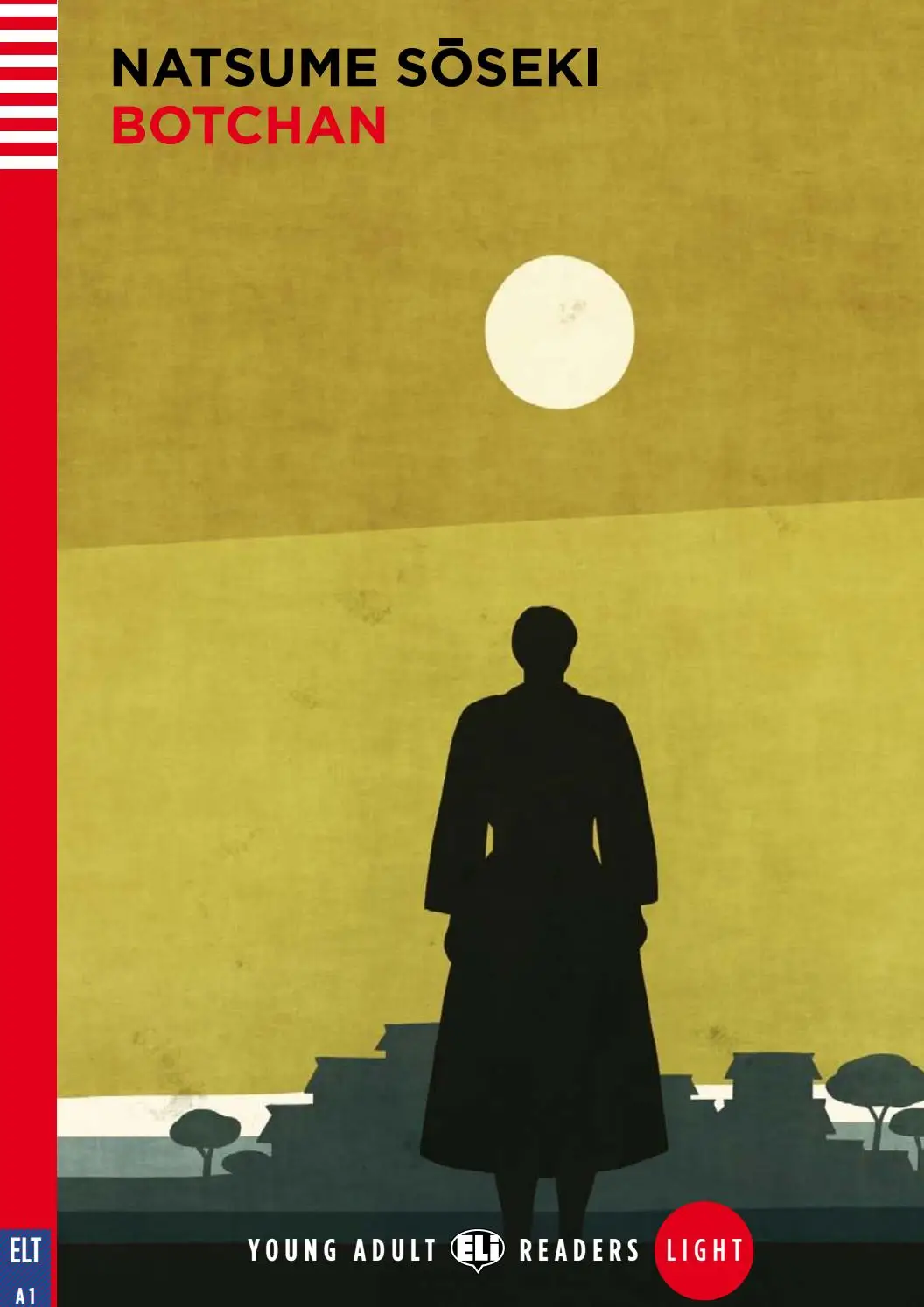
Botchan is a novel written in 1906. It is considered to be one of the most popular novels in Japan.
A Tokyoite known only as Botchan thinks teaching a bunch of high-school yokels in the sticks will be simple-after all, they’re essentially living in yesteryear.
But our narrator soon learns that he is surrounded by schemers and tricksters and that the teaching job that should have been a walk in the park is more like a walk off a plank. Can he survive and make it back to civilization on Moral Fibre alone?
Syllabus
Nouns Abstract, concrete, animate, inanimate, collective, common, proper nouns, countable, uncountable.
Pronouns Interrogative who, what,
Indefinite someone, something,everything, anything, nothing.
Quantifiers All, a lot of, some/any, more.
Adjectives Demonstrative, possessive, qualifying.
Prepositions Place (Position and Direction), Time.
Verbs Affirmative, Negative, Interrogative, Infinitives, regular and common irregular verbs, Present Simple, Present Continuous with present meaning, Simple past, Imperative. Modal verbs can, have to, must.
Botchan est un roman écrit en 1906. Il est considéré comme l’un des romans les plus populaires au Japon.
Un Tokyoïte connu uniquement sous le nom de Botchan pense qu’enseigner un tas de yokels du secondaire dans les bâtons sera simple – après tout, ils vivent essentiellement dans le passé.
Mais notre narrateur apprend vite qu’il est entouré d’intrigants et de filous et que le travail d’enseignement qui aurait dû être une promenade dans le parc ressemble plus à une promenade sur une planche. Peut-il survivre et revenir à la civilisation sur la seule fibre morale?
Programme
Noms Abstraits, concrets, animés, inanimés, collectifs, communs, noms propres, dénombrables, innombrables.
Pronoms Interrogative qui, quoi,
Indéfini quelqu’un, quelque chose, tout, n’importe quoi, rien.
Quantificateurs Tout, beaucoup, certains / tout, plus.
Adjectifs Démonstratif, possessif, qualifiant.
Prépositions Lieu (position et direction), heure.
Verbes affirmatifs, négatifs, interrogatifs, infinitifs, verbes irréguliers réguliers et communs, présent simple, présent continu avec sens présent, passé simple, impératif. Les verbes modaux peuvent, doivent, doivent.